
Introduction to Minestrone Soup
Minestrone soup is more than just a comforting bowl of goodness; it's the perfect go-to recipe for busy young professionals. As we juggle work, social commitments, and personal projects, having a quick, nutritious meal on hand becomes essential. This hearty dish comes together in about an hour and allows you to use whatever veggies and beans you have on hand, making it endlessly adaptable.
One of the best things about minestrone soup is its universal appeal. Packed with fiber-rich vegetables and protein from beans, this vegetarian dish promotes a healthy lifestyle. Plus, it’s an excellent way to sneak in greens that you might otherwise overlook. According to the USDA, a diet rich in vegetables can help reduce the risk of chronic diseases, which is incredibly relevant for your busy lifestyle.
Making a big batch of minestrone means you’ll have leftovers ready to go for the week, easing weeknight cooking stress. Consider serving it with some crusty bread to round out the meal. Interested in more warm, delicious soup recipes? Check out this collection of soup ideas for further inspiration!
Doesn’t it sound wonderful to have this nourishing meal ready whenever you need it? Let’s get started on your new favorite minestrone soup recipe!

Ingredients for Minestrone Soup
Essential ingredients for a hearty minestrone
Creating a delicious minestrone soup begins with the right base. Here are the core ingredients you’ll need:
- Extra-virgin olive oil: Essential for sautéing the vegetables and adding flavor.
- Yellow onion, carrots, and celery: These aromatic veggies form the holy trinity of flavor for your minestrone.
- Garlic: Adds a fragrant kick that enhances the soup’s taste.
- Diced tomatoes: Canned or fresh, they offer a lovely acidity.
- Beans: Use cooked white beans or kidney beans for added protein and heartiness.
- Vegetable broth: The foundation of your soup’s flavor - a good quality broth makes all the difference.
- Pasta: Small shapes like elbows or orecchiette work best to soak up flavors.
For details on purchasing fresh ingredients, check sites like USDA FoodData Central for quality tips.
Optional add-ins for personal flair
Want to personalize your minestrone? Consider adding:
- Greens: Spinach or kale bring extra nutrients and color.
- Zucchini or bell peppers: More vegetables create a vibrant texture.
- Turkey bacon or Chicken ham: For those who want a smoky taste without the heft.
Feel free to experiment! Each addition can enhance the overall experience of this comforting dish.
Preparing Minestrone Soup
Minestrone soup is a comforting classic that's packed with nutrients and flavors. Making it at home can be surprisingly easy and immensely satisfying. So, let’s dive into the steps of crafting your own delicious bowl!
Gather Your Ingredients
The first step to making delicious minestrone soup is ensuring you have all the necessary ingredients at hand. Here’s what you’ll need:
- 2 tablespoons extra-virgin olive oil
- 1 medium yellow onion, diced
- 2 medium carrots, chopped
- 2 celery ribs, thinly sliced
- 1 teaspoon sea salt, plus more to taste
- Freshly ground black pepper
- 3 garlic cloves, grated
- 1 (28-ounce) can diced tomatoes
- 1½ cups cooked white beans or kidney beans, drained and rinsed
- 1 cup chopped green beans
- 4 cups vegetable broth
- 2 bay leaves
- 1 teaspoon dried oregano
- 1 teaspoon dried thyme
- ¾ cup small pasta (like elbows or orecchiette)
- ½ cup chopped fresh parsley
- Red pepper flakes (for a kick!)
- Grated Parmesan cheese, optional, for serving
Once you've gathered your ingredients, you're ready to start cooking!
Start with the Aromatics
Heat your Staub Dutch Oven over medium heat and drizzle in the olive oil. Once it shimmers, toss in the diced onion, chopped carrots, and sliced celery. Add a teaspoon of salt and several grinds of black pepper. Sauté these aromatics for about eight minutes, stirring occasionally until they soften and the kitchen starts to smell irresistible. This is where your flavorful base begins to form!
Add the Hearty Veggies and Beans
Next, it's time to bring in the heavy hitters! Add the grated garlic, diced tomatoes (with their juices), your choice of white or kidney beans, and chopped green beans to the pot. These veggies will make your minestrone soup hearty and satisfying. Stir everything together and let those flavors meld for a few minutes.
Pour in the Broth and Seasonings
Now, you’ll want to pour in 4 cups of vegetable broth. Add the bay leaves, oregano, and thyme. These herbs will elevate the dish with a depth of flavor that’s simply delightful. Bring the soup to a gentle simmer and cover, letting it cook for about 20 minutes. This simple simmering stage allows the ingredients to truly come together.
Cook the Pasta and Finish the Soup
After the 20 minutes are up, it’s pasta time! Stir in the small pasta and let it cook uncovered for an extra 10 minutes. This allows the pasta to absorb the flavors of the minestrone soup and achieve that perfect al dente texture. Once done, taste your soup and adjust the seasoning if necessary. Serve it hot, topped with fresh parsley, a sprinkle of red pepper flakes for an extra kick, and grated Parmesan cheese if desired.
Enjoy your homemade minestrone soup alongside some crusty bread – it’s a meal worth sharing! If you're interested in more healthy recipes, check out the Nutrition.gov for additional insights on wholesome eating.

Variations on Minestrone Soup
Seasonal minestrone variations
Minestrone soup is wonderfully versatile, allowing you to blend in seasonal vegetables for a fresh twist. In the spring, consider adding asparagus and peas, while summer is perfect for zucchini and fresh tomatoes. Come autumn, pumpkin or butternut squash creates a cozy, hearty soup. Winter is an excellent time to include root vegetables like parsnips and sweet potatoes. Each season brings a bounty of flavors that can elevate your classic minestrone into a new experience! For more inspiration on seasonal cooking, check out this guide on seasonal produce.
Protein-packed options for minestrone
Looking to make your minestrone soup even heartier? Cram in some protein! You can incorporate diced chicken ham or turkey bacon for a savory punch. If you prefer vegetarian options, try adding extra white beans or lentils for added nutrition. Another tasty idea is to toss in some diced tofu or chickpeas for a protein boost that keeps it hearty. This versatility not only enhances the nutritional value but also caters to various dietary needs, making your soup truly customizable!
Cooking Tips and Notes for Minestrone Soup
Achieving the Best Flavor
To take your minestrone soup to the next level, start with high-quality ingredients. Freshly chopped vegetables yield vibrant flavors, and using homemade or low-sodium vegetable broth can significantly enhance the taste. Don’t rush the cooking—allowing your vegetables to soften slowly helps develop a rich base. For an extra depth of flavor, consider adding a splash of balsamic vinegar before serving. You might even experiment with herbs like fresh basil or a squeeze of lemon juice for a zesty finish.
Adjusting the Texture to Your Liking
Texture is key in a comforting minestrone soup. If you prefer a chunkier version, feel free to cut your veggies into larger pieces or skip the blending step altogether. Conversely, if you like a smoother consistency, you could purée a portion of the soup and mix it back in. Don't forget about the pasta; adjusting its amount based on your preference can make the soup heartier or a bit lighter. Aim for the right balance that suits your taste! For helpful tips on pasta variations, check out this guide.
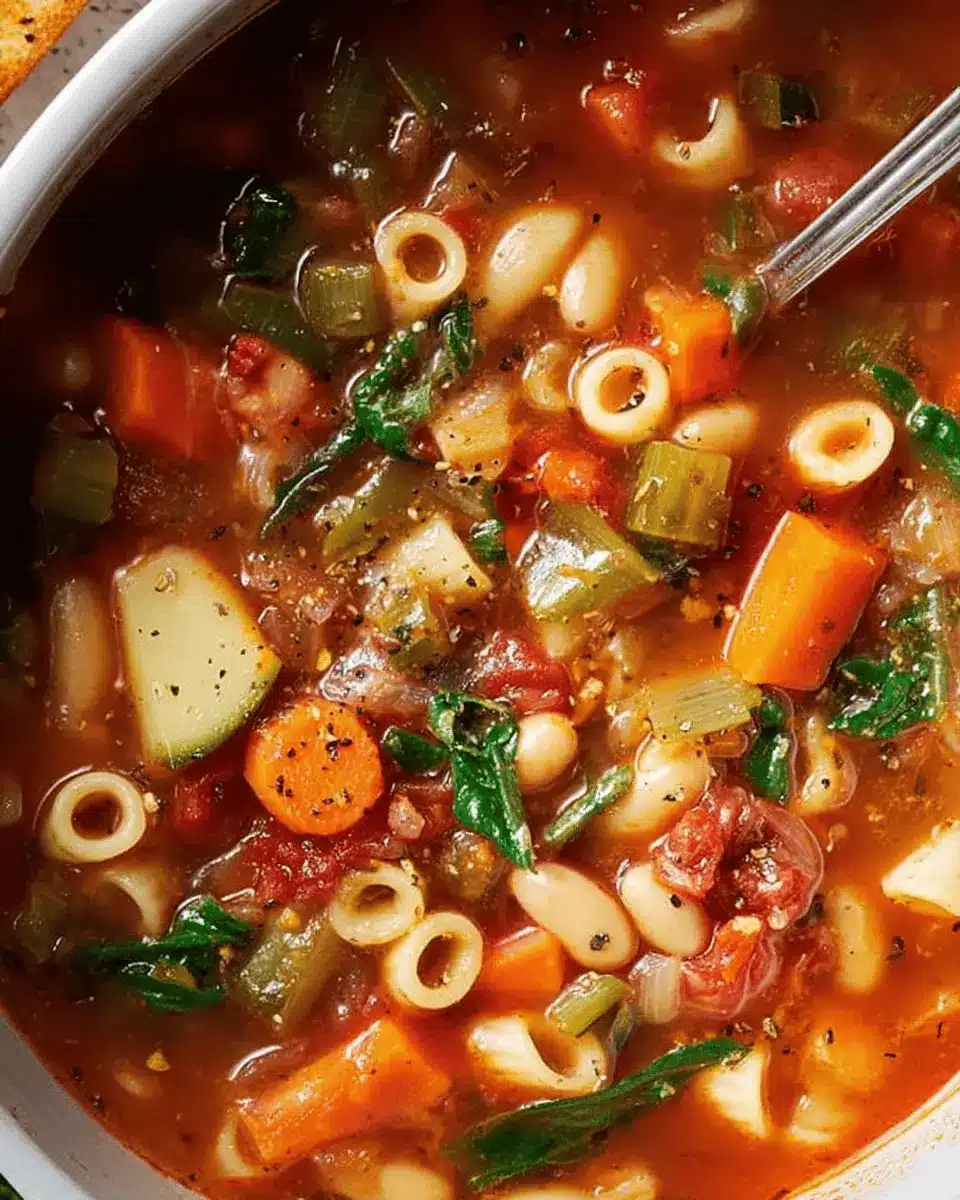
Serving suggestions for Minestrone Soup
Perfect sides to complement your soup
Pairing minestrone soup with the right sides can elevate your meal. Here are a few suggestions:
- Crusty Bread: A classic choice, perfect for dipping into the rich flavors of the soup.
- Garlic Breadsticks: Lightly toasted and brushed with garlic, these add a savory touch.
- Simple Green Salad: A fresh salad with mixed greens, cucumbers, and a zesty vinaigrette balances the heartiness of the soup nicely.
For more inspiration on side dishes, check out this article on easy pairings.
Creative ways to present your dish
Presentation can make your minestrone soup feel extra special. Here are some fun ideas:
- Rustic Bowls: Serve soup in rustic ceramic bowls for a cozy, homestyle vibe.
- Herb Garnish: Sprinkle freshly chopped parsley or basil on top for a pop of color and freshness.
- Cheese Grater: Offer grated Parmesan cheese on the side so everyone can add their preferred amount.
With these serving suggestions, your minestrone soup meal will not only taste great but look appealing too!
Time breakdown for Minestrone Soup
Creating a cozy pot of minestrone soup is a quick and rewarding endeavor. Here’s the time you'll need to whip up this delicious dish:
Preparation time
You'll need about 15 minutes to chop, slice, and gather all the ingredients. This is your chance to get everything organized and ready to go, making the cooking process smooth and enjoyable.
Cooking time
The soup takes approximately 30 minutes to cook, allowing the vegetables to become tender and the flavors to meld beautifully. You’ll have a bubbling pot of goodness in no time!
Total time
In just 45 minutes, you can transition from prep to serving a hearty bowl of minestrone soup that’s sure to impress. Perfect for a busy weeknight or a leisurely weekend meal!
For more tips and variations on this recipe, check out resources like Bon Appétit or Food Network for culinary inspiration.
Nutritional Facts for Minestrone Soup
Calories per serving
A single serving of minestrone soup contains approximately 180–220 calories, making it a light yet filling option for any meal. Perfect for lunch or dinner, this soup allows you to enjoy a heartwarming dish without the guilt.
Key nutrients to note
This nutritious soup is packed with vitamins and minerals thanks to its colorful array of vegetables and legumes. Highlights include:
- Fiber: A great source, aiding digestion and keeping you full.
- Protein: Thanks to beans and optional cheese, it supports muscle health.
- Vitamins A and C: Contributions from veggies bolster your immune system.
By choosing homemade minestrone soup, you control the ingredients and avoid unnecessary preservatives. Looking to elevate your nutrition game? Check out this guide on the benefits of vegetable-rich diets for more insights!
FAQs about Minestrone Soup
Can I freeze minestrone soup?
Absolutely! Freezing minestrone soup is a fantastic way to enjoy it later. Just let it cool completely, then transfer it to an airtight container or freezer bag. It can stay fresh in the freezer for up to three months. When you’re ready to bask in its warming flavors again, simply thaw it in the refrigerator overnight and reheat on the stovetop.
What are the best vegetables for minestrone?
Minestrone soup is wonderfully versatile, so feel free to mix and match your favorite vegetables. Common choices include:
- Carrots
- Celery
- Zucchini
- Spinach
- Green beans
Adding seasonal vegetables not only enhances flavor but also boosts nutritional value. Check out a detailed list of vegetables that shine in minestrone here.
How can I customize my minestrone for dietary needs?
Customizing your minestrone soup for dietary preferences is easy! For a gluten-free version, swap regular pasta with gluten-free alternatives. If you’re aiming for a low-carb meal, consider using spiralized vegetables instead of pasta. Plus, you can easily make this soup vegan by omitting cheese or using a plant-based cheese alternative. Embrace creativity in your kitchen!
Conclusion on Minestrone Soup
Minestrone soup is a delightful embrace of fresh vegetables and vibrant flavors. This hearty recipe is not just a meal but a canvas for creativity—feel free to add your favorite ingredients. Serve it warm with crusty bread, and you’ll have a comforting meal that nourishes both body and soul. For more on the benefits of veggie-packed soups, check out this article.

Minestrone Soup
Equipment
- Staub Dutch Oven
Ingredients
Base Ingredients
- 2 tablespoons extra-virgin olive oil
- 1 medium yellow onion, diced
- 2 medium carrots, chopped
- 2 ribs celery, thinly sliced
- 1 teaspoon sea salt plus more to taste
- Freshly ground black pepper
- 3 cloves garlic, grated
- 28 ounces can diced tomatoes
- 1.5 cups cooked white beans or kidney beans, drained and rinsed
- 1 cup chopped green beans
- 4 cups vegetable broth
- 2 bay leaves
- 1 teaspoon dried oregano
- 1 teaspoon dried thyme
- 0.75 cup small pasta elbows, shells, or orecchiette
- 0.5 cup chopped fresh parsley
- Red pepper flakes
- Grated Parmesan cheese optional, for serving
Instructions
Cooking Steps
- Heat the oil in a large pot over medium heat. Add the onion, carrots, celery, salt, and several grinds of black pepper, and cook, stirring occasionally, for 8 minutes, until the vegetables begin to soften.
- Add the garlic, tomatoes, beans, green beans, broth, bay leaves, oregano, and thyme. Cover and simmer for 20 minutes.
- Stir in the pasta and cook, uncovered, for 10 more minutes, until the pasta is cooked through.
- Season to taste and serve with parsley, red pepper flakes, and parmesan, if desired.




Leave a Reply