
Introduction to Vegetable Soup
Making your own vegetable soup is truly a game-changer for your kitchen routine. Not only is it an incredible way to pack in the nutrients, but it also allows you to explore an array of flavors without relying on processed alternatives. A homemade vegetable soup can boast a vibrant medley of seasonal vegetables, herbs, and spices that are far superior to anything you'll find in a can.
Why Homemade Vegetable Soup is a Game-Changer
When you craft a vegetable soup from scratch, you have full control over the ingredients. This means you can customize it to suit your taste or dietary needs—add extra greens for a nutrient boost or swap in your favorite root vegetables. A study from the American Institute for Cancer Research emphasizes that increasing your vegetable intake can support overall health, so why not start with a comforting soup?
Additionally, homemade soups can be a fantastic way to reduce food waste. Use up wilting veggies in your fridge before they go bad and transform them into a deliciously warming meal. The best part? You can make a big batch to enjoy throughout the week, saving you precious time on those busy weekdays.
So grab your favorite pot, and let’s dive into making this delightful vegetable soup! For a full recipe, check out the ingredients and directions below.
Ingredients for Vegetable Soup
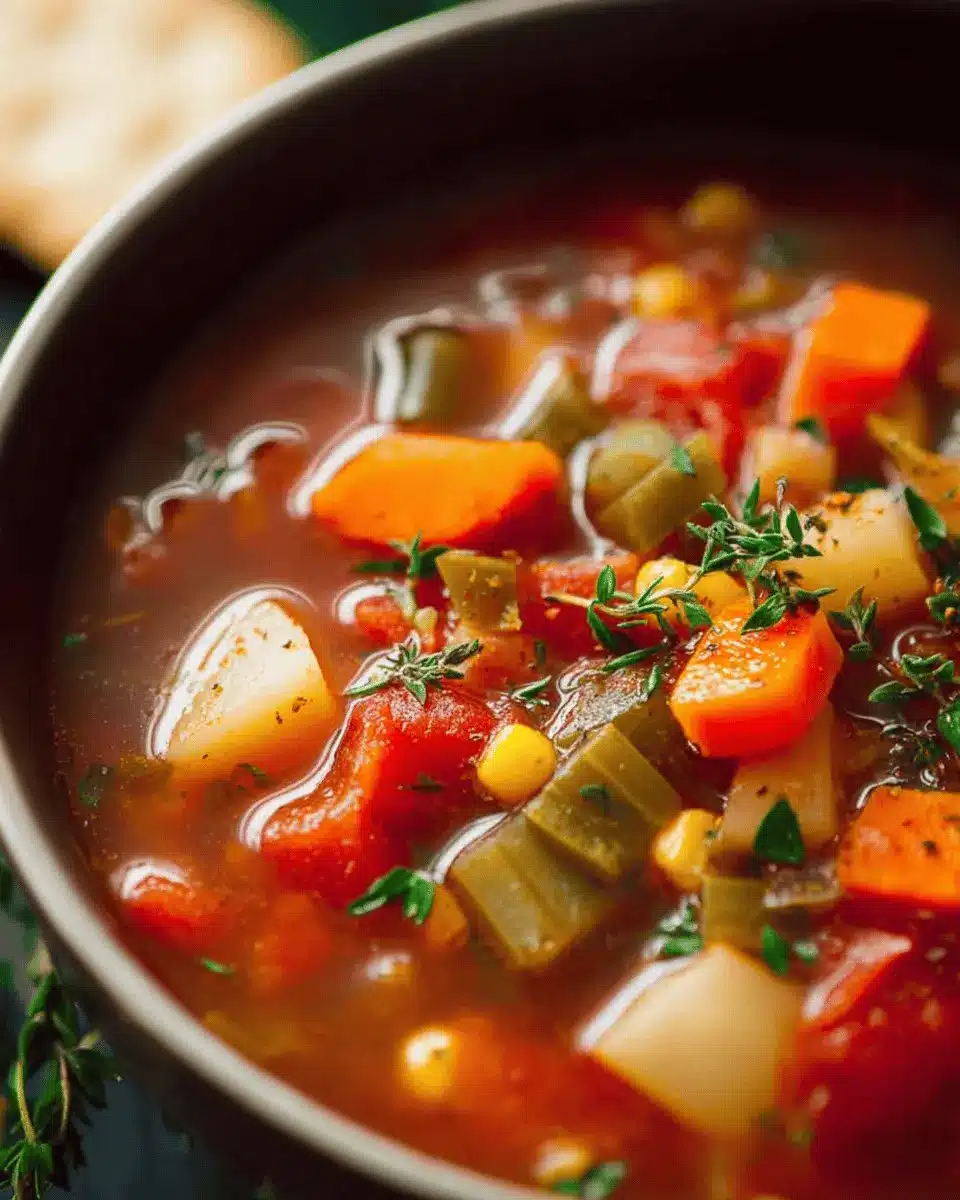
Creating a delicious vegetable soup starts with selecting the right ingredients. Let’s take a look at the essentials and some extra ingredients that can elevate your dish to the next level.
Essential ingredients for a hearty soup
To craft a hearty vegetable soup, you’ll want to include the following basic ingredients:
- Olive oil: For sautéing your vegetables.
- Onion, carrots, and celery: Known as the holy trinity of soups, these aromatics form the flavor base.
- Garlic: Adds depth and richness.
- Broth: Choose low-sodium chicken or vegetable broth for a balanced flavor.
- Diced tomatoes: Bring brightness and acidity.
- Potatoes: For a filling, comforting texture.
- Fresh parsley and bay leaves: Essential for a fragrant finish.
These ingredients create a solid foundation for any vegetable soup recipe.
Suggested additions for extra flavor
Now, let’s talk about boosting flavor! Here’s how to take your soup from good to great:
- Herbs: Consider adding fresh thyme, basil, or even Italian seasoning.
- Parmesan rind: Tossing in a rind during simmering adds a savory umami kick.
- Fresh corn or green beans: Enhance texture and freshness. For more inspiration on seasonal vegetables, check out this guide from the USDA.
These simple enhancements will make your vegetable soup truly stand out! Enjoy the process and make it yours.
Preparing Vegetable Soup
Making a hearty vegetable soup from scratch is not only rewarding but also incredibly simple. Follow these steps, and soon you'll have a bubbling pot of deliciousness that’s perfect for any occasion!
Gather Your Ingredients
First things first, gather all your ingredients. This step is often underrated but crucial for a smooth cooking experience. You’ll need:
- 2 tablespoon olive oil
- 1 ½ cups chopped yellow onion (about 1 medium)
- 2 cups peeled and chopped carrots (around 5)
- 1 ¼ cups chopped celery (about 3 stalks)
- 4 cloves garlic, minced
- 4 (14.5 oz) cans low-sodium chicken or vegetable broth
- 2 (14.5 oz) cans diced tomatoes (undrained)
- 3 cups peeled and diced potatoes (about 3 medium)
- ⅓ cup chopped fresh parsley
- 2 bay leaves
- ½ teaspoon dried thyme (or 1 tablespoon fresh thyme leaves)
- Salt and freshly ground black pepper to taste
- 1 ½ cups chopped green beans
- 1 ¼ cups corn
- 1 cup peas
Having everything ready will prevent any frantic last-minute searches for ingredients while you’re cooking.
Sautéing the Base Vegetables
In a large pot, heat up the olive oil over medium-high heat. Once it’s shimmering, toss in the onions, carrots, and celery. Sauté these for about 4 minutes until they start to soften. This step builds the soup base, enriching the flavors beautifully! After that, add the minced garlic and cook for another 30 seconds for that aromatic kick.
Adding Broth and Tomatoes
Now, it’s time to introduce the main players: the broth and tomatoes. Pour in the low-sodium broth and add the undrained diced tomatoes. These ingredients not only contribute to the soup's heartiness but also infuse it with vibrant flavor. Stir in the diced potatoes, fresh parsley, bay leaves, dried thyme, and a pinch of salt and pepper. These will elevate your vegetable soup from simple to sensational!
Incorporating Potatoes and Seasonings
Bring the mixture to a boil, then bring the heat down and let it simmer. The potatoes need to get tender, which usually takes about 20 to 30 minutes. Make sure to taste it along the way and adjust the seasonings to your preference. Feel free to be generous with herbs—there’s no such thing as too much flavor!
Simmering and Adding Remaining Veggies
Once the potatoes are nearly tender, it’s time to incorporate the remaining vegetables: the green beans, corn, and peas. Give everything a good stir and let it cook for an additional 5 minutes until everything is heated through.
And voilà! You’ve made a comforting, nutritious vegetable soup perfect for any dinner table. For some extra flavor, consider garnishing with freshly grated Parmesan or a drizzle of high-quality olive oil. Enjoy your delicious creation!
For more tips on making soups even tastier, check out The Kitchn or Serious Eats for expert advice!
Variations on Vegetable Soup
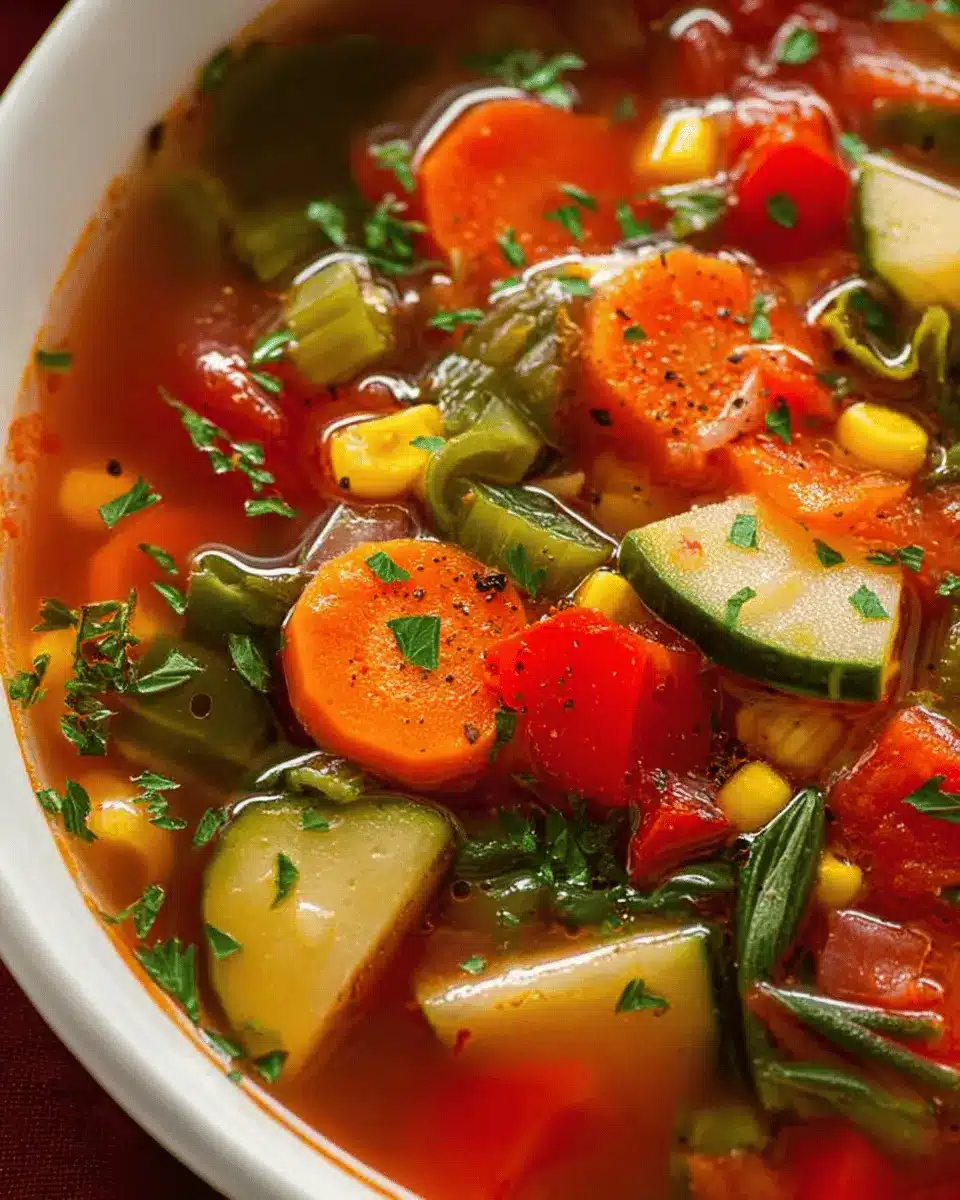
Spicy Vegetable Soup
If you're craving a kick in your soup, try adding a touch of heat! Incorporate crushed red pepper flakes or diced jalapeños into your vegetable soup for that extra spice. For an even bolder flavor, consider mixing in a tablespoon of sriracha or hot sauce. This will not only warm you up but also enhance the rich, savory flavors of the broth.
Creamy Vegetable Soup
For a creamy twist to your classic vegetable soup, blend a portion of the soup until smooth and then return it to the pot. Adding a splash of heavy cream, coconut milk, or a dollop of sour cream can make this soup feel luxurious and indulgent. If you prefer a dairy-free option, try cashew cream for a nutty flavor that pairs wonderfully with the vegetables.
These variations are a great way to customize your soup for different tastes and occasions! Looking for more ideas? Check out these 10 healthy soup recipes.
Cooking tips and notes for Vegetable Soup
Enhancing flavors with herbs and broth
To elevate your vegetable soup, consider experimenting with various herbs. Herbs like basil, oregano, and even a sprinkle of Italian seasoning can add delightful depth. For a richer flavor, opt for homemade chicken stock or quality vegetable broth instead of store-bought options. A tip I love? Toss in a corn cob for a touch of sweetness while it simmers. Don't forget, removing a parmesan rind after cooking leaves a subtle creaminess that takes the soup to the next level.
Making it vegan-friendly
Worried about keeping your soup plant-based? It’s simple! Just swap out chicken broth for vegetable broth and ensure your other ingredients are vegan-friendly. You can add a scoop of cashew cream or a dollop of coconut yogurt at the end for added creaminess without sacrificing flavor. Go ahead, enjoy a comforting bowl of vegetable soup that satisfies the soul! For additional vegan recipes, consider checking out this comprehensive guide on vegan cooking.
Serving suggestions for Vegetable Soup
Pairing soup with sides
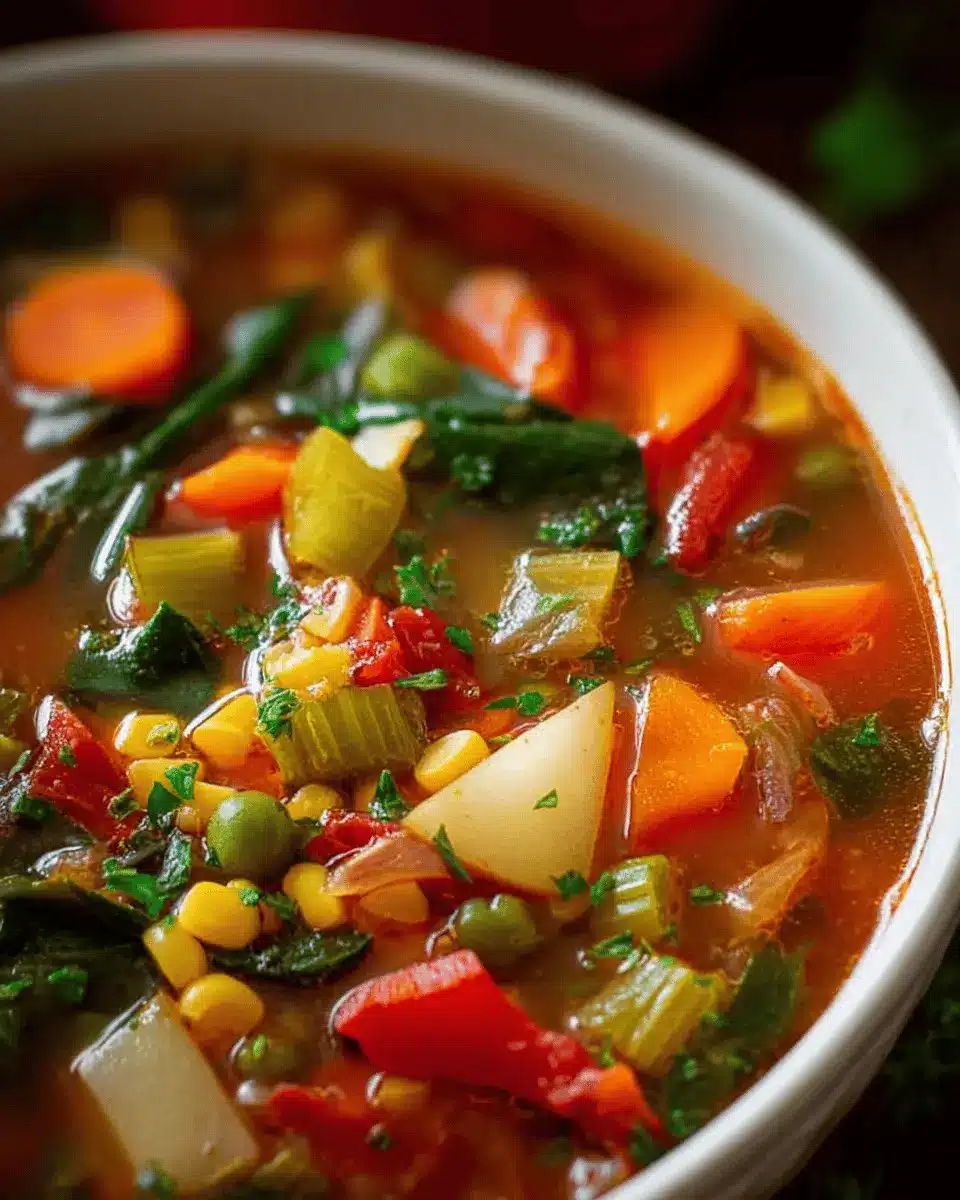
Enhancing your vegetable soup experience can be as easy as selecting the right sides. Here are a few delightful options to serve alongside:
- Crusty Bread: A warm baguette or sourdough is perfect for dipping.
- Grilled Cheese Sandwich: This classic combo never fails to satisfy.
- Salad: A fresh green salad can complement the soup's heartiness, adding a refreshing crunch.
Consider featuring a citrus or vinaigrette dressing to brighten the meal even more!
Presenting the dish for guests
When it comes to serving your vegetable soup, presentation can elevate the entire dining experience. Try these tips:
- Use Rustic Bowls: Opt for pottery or vibrant-colored bowls to bring warmth.
- Garnish with Fresh Herbs: A sprinkle of parsley or thyme on top adds flair and a pop of color.
- Serve with a Drizzle of Olive Oil: A simple splash enhances flavor and looks inviting.
With these thoughtful touches, your vegetable soup will be a hit—perfect for gatherings or cozy nights in!
Time Breakdown for Vegetable Soup
Preparation Time
Getting your vegetable soup ready is a breeze! It only takes about 15 minutes to chop your vegetables, gather your ingredients, and prep everything you need.
Cooking Time
Once everything is prepped, your pot of goodness will need 40 minutes on the stove to cook until all the flavors meld beautifully together.
Total Time
In just 55 minutes, you’ll have a hearty, delicious soup perfect for any occasion. Whether it's a cozy evening in or a hearty meal for guests, this vegetable soup has got you covered!
For a deeper dive into cooking techniques and ingredient choices, check out this guide on Cooking Vegetables Perfectly from the James Beard Foundation. It's packed with tips that can elevate any vegetable dish!
Nutritional Facts for Vegetable Soup
Calories
A hearty serving of this vegetable soup clocks in around 120 calories. This makes it a fantastic choice for a light lunch or dinner while keeping your caloric intake in check.
Dietary Fiber
Each serving packs about 4 grams of dietary fiber, supporting good digestion and helping you feel full longer. Adding more veggies or beans can boost the fiber content even more!
Vitamins and Minerals
This vegetable soup is rich in essential vitamins and minerals. You can expect a good dose of Vitamin A from carrots, Vitamin C from tomatoes, and potassium from potatoes. It's a nutrient-packed option that nourishes your body with every spoonful.
For more information on the health benefits of vegetables, check out Healthline's guide to vegetables.
Feel free to share your soup-making adventures or any variations you love!
FAQs about Vegetable Soup
Can I Use Frozen Vegetables?
Absolutely! Frozen vegetables are a great option for your vegetable soup. They are often flash-frozen at peak freshness, which means you can still enjoy that delicious, vibrant taste. Simply add them in during the last few minutes of cooking to retain their texture and flavor.
How Can I Store Leftover Vegetable Soup?
Storing leftover vegetable soup is quite simple. Allow the soup to cool completely, then transfer it to an airtight container. It can be kept in the refrigerator for up to 4 days. For longer storage, consider freezing it in portions—just be sure to leave some space for expansion as it freezes! When you're ready to enjoy it again, simply reheat on the stove or in the microwave.
What Are the Health Benefits of Vegetable Soup?
Vegetable soup is packed with nutrients! It is low in calories yet high in fiber, vitamins, and minerals, making it a great way to support your overall health. Studies have shown that consuming a variety of vegetables can help lower the risk of chronic diseases, improve digestion, and promote heart health. Plus, when you make it at home, you can control the sodium content, making it even healthier. For more details on the benefits of vegetables, check this Healthline article.
Conclusion on Vegetable Soup
Embracing homemade goodness in every bowl
Creating your own vegetable soup is not just about nourishment; it's about the love and care you pour into every pot. This recipe is a delightful way to savor fresh ingredients, and the comforting warmth will remind you of home. So, grab your veggies, and let’s make homemade magic happen!
For more inspiration, check out these nutritional benefits of vegetable soups or explore creative twists on the classic recipe with these variations. Happy cooking!

Vegetable Soup
Equipment
- large pot
Ingredients
Base Ingredients
- 2 tablespoon olive oil
- 1.5 cups chopped yellow onion (1 medium)
- 2 cups peeled and chopped carrots (about 5)
- 1.25 cups chopped celery (about 3)
- 4 cloves garlic minced
- 4 14.5 oz cans low-sodium chicken broth or vegetable broth
- 2 14.5 oz cans diced tomatoes (undrained)
- 3 cups peeled and diced potatoes (½-inch thick from about 3 medium)
- 0.33 cups chopped fresh parsley
- 2 leaves bay leaves
- 0.5 teaspoon dried thyme or 1 tablespoon fresh thyme leaves
- Salt and freshly ground black pepper to taste
- 1.5 cups chopped frozen or fresh green beans
- 1.25 cups frozen or fresh corn
- 1 cup frozen or fresh peas
Instructions
Cooking Steps
- Heat olive oil in a large pot over medium-high heat.
- Add onions, carrots, and celery and sauté for 4 minutes. Then add garlic and sauté for 30 seconds longer.
- Add in broth, tomatoes, potatoes, parsley, bay leaves, thyme, and season with salt and pepper to taste.
- Bring to a boil, then add green beans.
- Reduce heat to medium-low, cover, and simmer until potatoes are almost fully tender, about 20 - 30 minutes.
- Add corn and peas and cook for 5 minutes longer. Serve warm.




Leave a Reply